Servants of God
Maria Adelaide di Santa Teresa
Biography
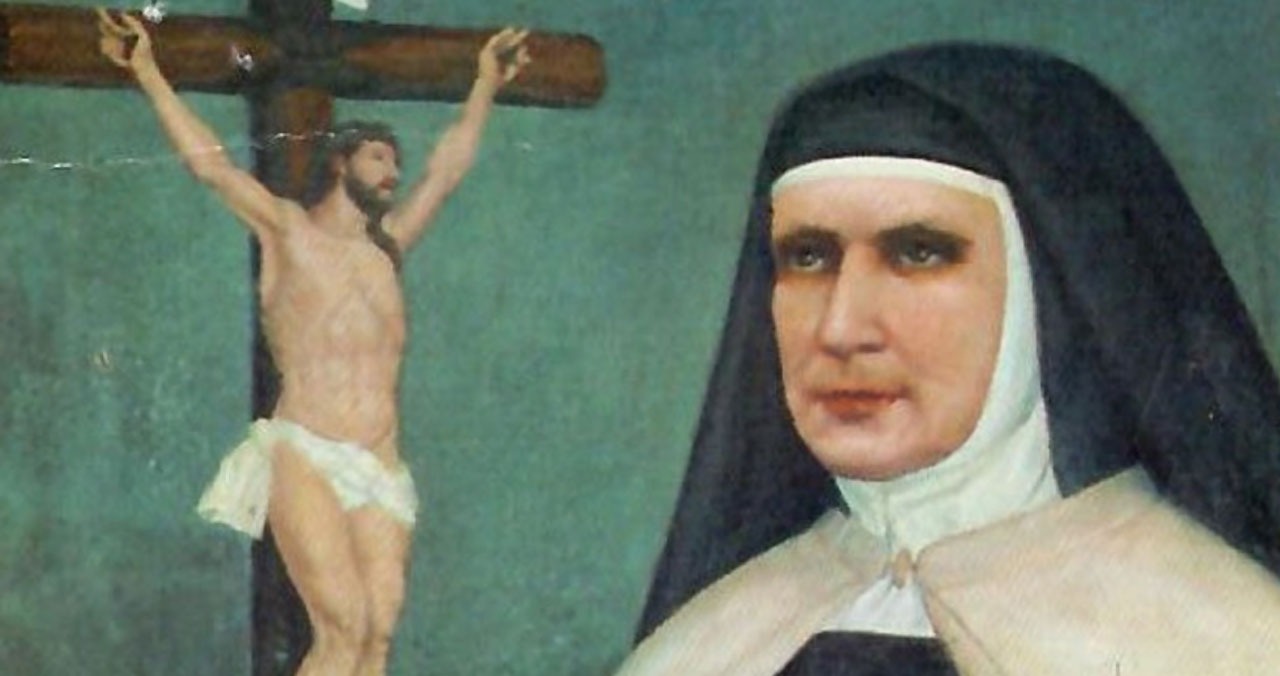
Joan Adelaide O’Sullivan Rouley was born in New York on October 8, 1817 to an Anglican father and a Catholic mother.
She was baptized in the Anglican Church. Four years after, the young girl decided to attend the Catholic church. On the death of her father, both her brother and mother wanted to return to the Anglican Church, but Joan Adelaide was already anchored in Catholicism and remained there. In 1840, she entered the Visitation convent in Georgetown. During her life as a Salesian nun, she read the writings of St. Teresa of Jesus and in her heart she decided to become her daughter.
With the help of her confessor, she was able to realize her desire and after many difficulties and unexpected paths she arrived in Guatemala City on September 8, 1843, where she entered the monastery of the Discalced Carmelite nuns, receiving the name of Mary Adelaide of Saint Teresa.
In 1868 she was elected Prioress of the community, and as such, faced the expulsion of their community due to the secularization of the liberal reforms that occurred in 1871. Realizing the impossibility of returning to her monastery, with a group of nuns she carried out a journey that took them to Cuba, the United States and finally to Spain, restructuring the life of the Teresian Carmel in Grajal de Campos (León) in 1882.
She died on the 15th of April 1893.
On November 23rd, 1984, the decree of validity was granted to the Diocesan Inquiry into her «life, virtue and reputation for holiness».
Procedure
1. The canonical norms concerning the procedure to be followed in the Causes of Saints are stated in the Apostolic Constitution Divinus Perfectionis Magister promulgated by John Paul II on 25 January 1983 (AAS LXXV, 1983, 349-355).
2. To initiate a Cause it is necessary that at least five years pass after the death of the candidate. This is to allow for greater balance and objectivity in the evaluation of the case and to allow the emotions of the moment to decant. There must be a clear conviction among people about his/her sanctity (fama sanctitas) and about the efficacy of his/her intercession with the Lord (fama signorum).